Recently I caught one of my own numbers counting the wrong thing.
I had been quoting how long it took sellers to come back after they went quiet. It was a good number, it made a good point, and when I went to use it again I looked at what those sellers actually said when they came back. Most of them came back to tell me to stop.
So I pulled every first reply we have ever received and sorted it by what it actually was.
(If you want the same sort run on your own list, the free Pipeline Grader does it. It reads your actual list rather than a questionnaire, and we never store, sell, or message it.)
What our real estate texting reply rate actually looks like
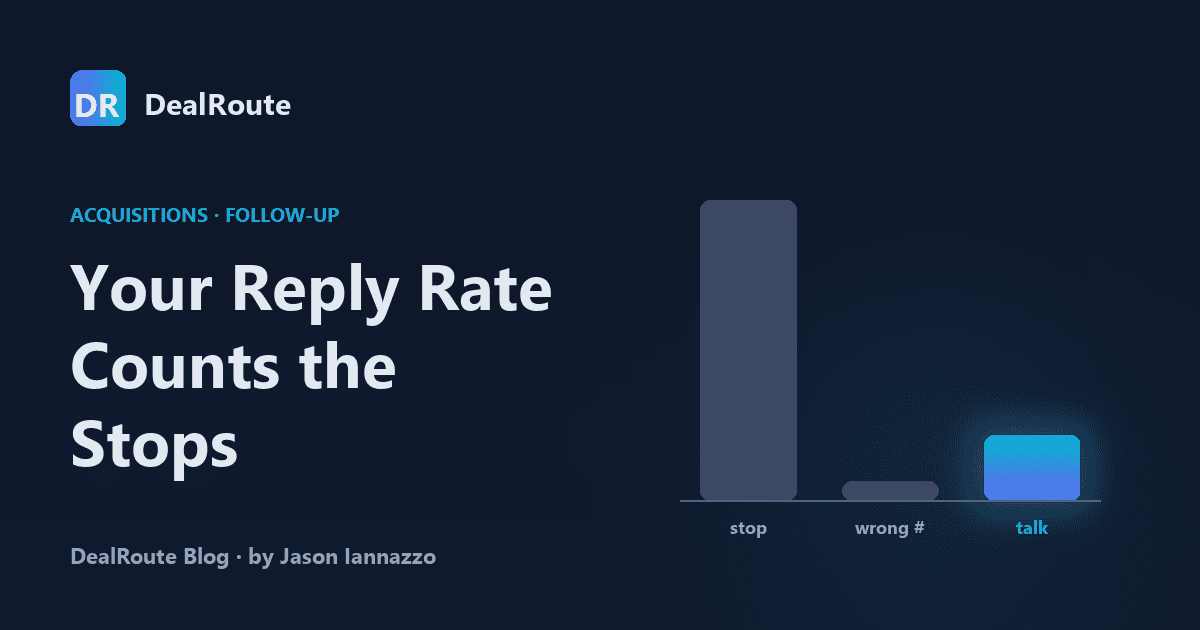
699 sellers have written back to us at least once. Their first reply:
- 545 asked to stop. 78 percent.
- 38 said wrong number. 5 percent.
- 116 wanted to talk. About one in six.
Five out of six first replies were someone asking us to go away.
Why that matters more than it sounds
Almost every number people trade in this business is a reply rate. It is the easiest thing to count, and it counts the stop the same as the seller who wants to meet. A campaign that doubles its stops looks like a campaign that doubled its engagement.
A stop is not an answer. It is a request, and one you have to honor immediately. It tells you nothing about whether your follow-up works. It tells you a lot about whether your first message did.
Once I took the stops out, the picture that was left was smaller and much more useful. One in six. And those sellers, the ones who actually talk, mostly do it late: the middle one answers about ninety eight days after their notice is recorded. I wrote about that timing last week.
What staying present looks like when most replies are a no
If one in six is the real signal, the job is not to generate more replies. It is to be there for the one without manufacturing more of the five. That changes how you build follow-up.
The first message is the expensive one. In our own numbers the opt-out rate on the first message is roughly double the rate a few touches later. The people who were going to stop mostly stop right away. Whatever you say first carries most of the risk, so it should ask for the least.
Honor a stop narrowly and instantly. When someone texts stop, that number stops, that moment, with no argument and no "are you sure." Never make anyone say it twice.
Space the rest out and make them light. The sellers who talk are on a timeline measured in months. A message every few days does not reach them faster. It just converts more of them into stops before their situation changes.
Keep one conversation per owner. Someone who owns three properties should not hear from you three times in a morning. That is how a maybe becomes a stop.
The honest caveats
This is one operator's pipeline in one state, and the opt-out mix depends heavily on the lists you buy and the first thing you say. Yours will not match ours.
The one in six is not one in six who wanted to sell. It is one in six who wanted to talk, which is the only thing a reply can tell you.
And the number that started this post, the one I had been quoting, is retired. It was measuring the wrong thing, and the reason I found it is the reason this post exists.
Go sort your own replies. If you cannot tell your stops from your conversations at a glance, your reply rate is telling you a story, and it is probably a flattering one.